
How Sports Betting Works in Ethiopia: Popular Sports, Betting Markets and Regulations

posted in: Blog | 0

Улучшение игры в футбол с помощью тренировок и упражнений

Sports betting in Ethiopia has changed considerably during the past decade. What began mainly as an activity offered through physical betting shops gradually expanded into mobile websites, applications and digital payment systems. For several years, betting in ethiopia developed within a licensed market supervised by the country’s lottery authority. However, the regulatory situation changed sharply at the end of 2025, when the government revoked the operating licences of all sports betting companies.

Understanding the Ethiopian market therefore requires more than a description of odds and popular competitions. It is also necessary to consider how the industry developed, which sports attracted the greatest attention, how betting markets worked and why the authorities eventually ordered licensed operators to stop their activities.

The Development of Sports Betting in Ethiopia

Ethiopia had a formal legal framework covering lotteries and sports betting long before online bookmakers became widely accessible. The main historical regulations included the National Lottery Administration Re-establishment Proclamation No. 535/2007 and the National Lottery Services Re-establishment Regulation No. 160/2009. Sports betting was later regulated more specifically through Directive No. 172/2021.

Under this system, operators needed permission from the national lottery authority before providing betting services. Licensed companies could operate retail branches, accept wagers on sporting events and, depending on their authorisation, provide digital betting services.

Physical betting shops initially played an important role in the market. Customers could visit a branch, examine the available matches, complete a betting slip and receive a printed ticket. This format remained accessible to people who did not regularly use online banking or mobile applications.

As internet access and smartphone use expanded, operators increasingly focused on digital channels. Mobile platforms allowed customers to view odds, combine several selections and follow live events without visiting a shop. Digital payments also made it possible to deposit and withdraw money more quickly.

The expansion of mobile betting changed the scale of the industry. Operators could serve customers outside major commercial areas, while betting products became available throughout the day. At the same time, the growth of digital services created additional regulatory challenges involving payments, advertising, player identification and financial monitoring.

Is Sports Betting Legal in Ethiopia in 2026?

The current situation is very different from the regulated market that existed before December 2025.

On 15 December 2025, the Ethiopian Lottery Service revoked the operating licences of all sports betting organisations. The decision covered physical betting centres, online betting platforms, agents and related payment services. Licensed companies were instructed to stop accepting bets and cease their operations.

The authorities linked the measure to alleged illegal practices, regulatory violations and broader national security concerns. The shutdown followed investigations into the activities of betting companies and their financial operations.

As a result, Ethiopia did not have an active licensed sports betting market at the beginning of 2026. An operator that previously held a licence could not continue relying on that old authorisation after the nationwide revocation.

This distinction is important because older articles may still describe sports betting as legal and regulated in Ethiopia. Such information may accurately reflect the situation before 15 December 2025, but it does not describe the status that followed the government’s decision.

The closure of the licensed market also does not automatically make an overseas platform legal for Ethiopian residents. Foreign websites may remain technically accessible, but availability is not the same as local authorisation. Customers using an unlicensed service may have limited protection if withdrawals are delayed, accounts are blocked or disputes arise.

Why Football Became the Main Betting Sport

Football was the central sport in Ethiopia’s betting industry. It offered a large number of matches, regular competition schedules and many different betting markets. European club football was particularly suitable for bookmakers because games took place almost every day across domestic leagues, continental tournaments and national cup competitions.

The English Premier League, UEFA Champions League, La Liga, Serie A and other major competitions regularly appeared on betting schedules. International tournaments such as the FIFA World Cup, Africa Cup of Nations and UEFA European Championship also generated extensive betting activity.

Ethiopian football had an important place in these selections as well. Ethiopia was one of the founding members of the Confederation of African Football in 1957 and won the Africa Cup of Nations when it hosted the tournament in 1962.

The national team, commonly known as the Walias, continued to compete in African qualification tournaments. Domestic club competitions and matches involving Ethiopian teams could also be included when operators had reliable schedules and official data.

Football suited both simple and complex wagers. A customer could select the winner of one match or combine several outcomes into an accumulator. Bookmakers could also offer markets involving goals, handicaps, individual halves, exact scores and in-play events.

Athletics and Ethiopia’s Sporting Identity

Ethiopia is internationally associated with long-distance running. Athletes such as Abebe Bikila, Haile Gebrselassie, Kenenisa Bekele, Tirunesh Dibaba, Meseret Defar and Tamirat Tola have contributed to one of the strongest distance-running traditions in world sport.

Haile Gebrselassie, for example, became a two-time Olympic champion, while Tirunesh Dibaba won major Olympic titles over long-distance events. Tamirat Tola became the fourth Ethiopian man to win the Olympic marathon title when he triumphed in Paris in 2024.

Despite this national importance, athletics usually offered fewer continuous betting opportunities than football. Major races were concentrated around the Olympic Games, World Athletics Championships, Diamond League meetings and international marathons. Football leagues, by comparison, provided weekly fixtures over many months.

Before the market shutdown, other sports available through bookmakers could include basketball, tennis, boxing and selected motor racing events. Their prominence depended largely on the international schedule and the range of events covered by each operator.

Common Sports Betting Markets

Before the licences were revoked, Ethiopian bookmakers generally used many of the standard markets found in other regulated betting regions.

The match-result market, often presented as 1X2, allowed a customer to choose a home victory, draw or away victory. Double chance covered two of those three outcomes, reducing the risk while usually producing lower odds.

Goal markets were also common. Over/under bets were based on whether the total number of goals would be above or below a specified line. A typical line of 2.5 goals could not end as an exact tie: three or more goals produced an over result, while zero, one or two goals produced an under result.

Both teams to score was another straightforward football market. The final result did not matter as long as each side either scored at least once or failed to do so, depending on the selected outcome.

Handicap betting adjusted the perceived difference between two teams. A stronger side could begin with a virtual disadvantage, while an underdog could receive a virtual advantage. These markets required a clearer understanding of the settlement rules than a basic match-result wager.

Bookmakers also offered accumulator bets, in which several selections were combined on one ticket. The total odds increased with every additional selection, but the entire ticket normally lost if even one result was incorrect. Accumulators could therefore appear attractive while carrying considerably more risk than a single bet.

Live betting allowed wagers after an event had started. Odds changed according to the score, time remaining, red cards, injuries and the general course of the match. Although live markets provided more choices, they also encouraged rapid decisions and repeated spending.

These products describe how the former licensed market operated. Their previous availability should not be interpreted as confirmation that they are currently authorised in Ethiopia.

The Role of Mobile Technology

Mobile access was one of the main factors behind the expansion of sports betting. A betting shop had limited opening hours and could only serve customers within a particular area. A mobile platform could remain available throughout the day and cover a much larger geographical market.

The mobile format also changed how betting products were presented. Instead of examining a printed list, a customer could filter competitions, compare odds and build a ticket directly on a phone. Live scores, statistics and match updates could be displayed alongside betting markets.

For operators, mobile platforms reduced dependence on physical branches. For regulators, however, they created more complicated questions. Authorities needed to examine where payments originated, whether operators followed licence conditions and how digital activity could be monitored across numerous accounts and transactions.

When Ethiopia ordered the market shutdown, the restriction therefore extended beyond traditional betting shops. Online services, agents and associated payment operations were also affected.

Betting Odds and the Bookmaker’s Margin

Odds represent both the potential return on a successful wager and the bookmaker’s estimate of an event’s probability. They do not provide a guarantee that the selected result will occur.

Decimal odds of 2.00, for example, correspond to an implied probability of 50 percent before the bookmaker’s margin is considered. Decimal odds of 4.00 represent an implied probability of 25 percent.

When the implied probabilities of all possible outcomes are added together, the result usually exceeds 100 percent. The amount above 100 percent represents the bookmaker’s built-in margin. This structure allows the operator to maintain a mathematical advantage across a large number of wagers.

The margin may be less obvious in accumulator bets because each selection adds another layer of probability. A ticket with many matches can produce a large potential payout, but the chance of every prediction being correct decreases as more selections are included.

Statistics, team form and tactical analysis may help a person understand a sporting event, but they cannot eliminate uncertainty. Injuries, referee decisions, weather, individual mistakes and unexpected changes during a match can influence the result.

Risks of Using Unlicensed Platforms

The closure of Ethiopia’s licensed betting market may encourage some customers to consider foreign or unregulated websites. This creates several practical risks.

An unlicensed operator may not follow Ethiopian consumer-protection requirements. There may be no effective local authority able to resolve a dispute over account verification, cancelled bets or unpaid withdrawals.

Payment security is another concern. Customers may be asked to send money through unfamiliar intermediaries, cryptocurrency wallets or personal accounts. These methods can make it difficult to recover funds or identify the organisation responsible for holding them.

Terms and conditions may also be unclear. An operator could impose unexpected wagering requirements, withdrawal limits or document checks after a customer requests payment.

Players should not assume that a professional-looking website, local-language interface or Ethiopian payment option proves that a platform has official permission to operate. Local authorisation must come from the relevant Ethiopian authority, not from the company’s own marketing claims.

Responsible Gambling and Financial Risk

Sports betting should never be treated as a reliable source of income. Every wager involves the possibility of losing the full stake, while the bookmaker’s margin means that customers collectively receive less than they wager over time.

Financial limits are therefore essential. Money required for rent, food, education, healthcare or debt repayment should not be used for gambling. Borrowing to continue betting can turn a temporary loss into a long-term financial problem.

Chasing losses is another major risk. After an unsuccessful bet, a person may increase the next stake in an attempt to recover money quickly. This approach does not change the probability of the next event and can produce even larger losses.

Warning signs include hiding betting activity, repeatedly exceeding personal limits, borrowing money, neglecting work or family responsibilities and feeling unable to stop. When gambling begins to affect daily life, the appropriate response is to stop and seek professional or personal support rather than place another wager.

What Could Happen to the Ethiopian Betting Market?

The licence revocation does not necessarily determine the permanent future of sports betting in Ethiopia. The government could keep the market closed, introduce a new regulatory system or allow selected operators to apply again under stricter conditions.

A future reopening would probably require clear rules covering licensing, taxation, advertising, payment processing, customer verification and responsible gambling. Authorities might also demand stronger reporting systems and greater control over financial transactions.

However, no operator should be regarded as legally active simply because it operated in Ethiopia before December 2025. A return to a regulated market would require a new official decision, updated authorisation or another clearly defined legal process.

Until such changes are announced, descriptions of the previous licensing system should be treated as historical information rather than evidence of current permission.

Conclusion

Sports betting in Ethiopia developed from a mainly retail activity into a mobile and digitally connected industry. Football dominated the market because of its frequent fixtures, international competitions and wide range of possible wagers. Athletics remained central to Ethiopia’s sporting identity, although it generated fewer regular betting events.

The most important development came on 15 December 2025, when the Ethiopian Lottery Service revoked all sports betting licences and ordered operators to stop their activities. This decision transformed the legal position of bookmakers, shops, online platforms and payment services.

Anyone examining the Ethiopian betting sector must therefore distinguish between its earlier regulated structure and its current status. Historical licences, familiar brand names and continued website access do not by themselves establish that a betting service is authorised to operate in the country.

The Spirit and Evolution of Martial Arts Practice

posted in: Blog | 0

Martial arts, beyond the striking and grappling, offer a deep well of personal transformation. From ancient temple traditions to modern city dojos, the goal has always been more than combat—it’s about discipline, self-discovery, and purposeful action. Whether one’s journey begins with traditional forms or newer adaptive styles, the core remains the same: refining the body, sharpening the mind, and strengthening the spirit through dedicated practice and guidance. 35
Traditional Wing Chun Etiquette

posted in: Blog | 0

In today’s world, focus and discipline can come from many places — whether through strategic pursuits like betting in Ethiopia or the rigorous path of martial arts. But physical training alone is never enough. True mastery requires the cultivation of both mind and character. 35
Non-classical Gung-Fu

posted in: Blog | 0

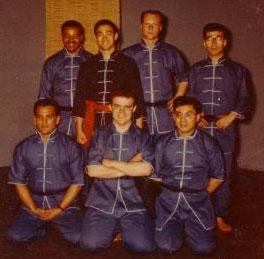
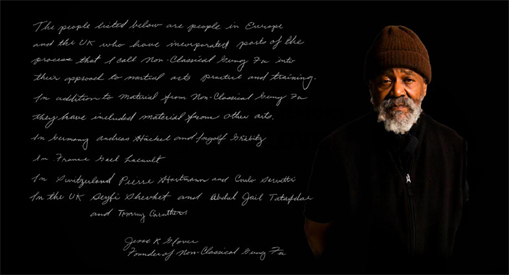
Non-Classical Gung Fu was founded by Jesse Glover, Bruce Lee’s first student and assistant instructor from 1959 to 1964. Jesse Glover came up with the name after asking Bruce Lee for permission to teach his own class. Bruce Lee agreed—with one important condition: Jesse should not call it Wing Chun or Jun Fan. This marked the beginning of what would later be known as Non-Classical Gung Fu, a fighting method rooted in Bruce Lee’s early teachings but evolved through Jesse’s own research, practice, and experience. 35
Statement about Jesse Glover

posted in: Blog | 0

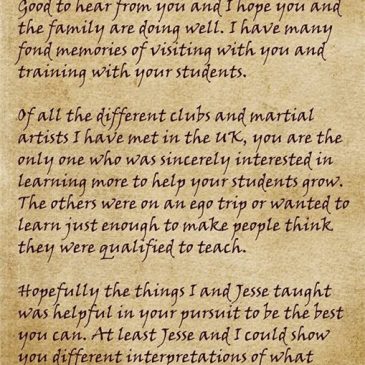
“It is with great sorrow that I have to announce the passing away of my teacher and good friend Jesse Glover. He has been a great inspiration and source of knowledge to me. He was for me a great martial arts teacher and a very kind and giving human being, I will miss him dearly. Thank you Jesse for all your influence and help”.
Seyfi Shevket